
You feel a sharp bite, look down, and see absolutely nothing. Hours later, an itchy red welt appears, and you’re left wondering what bit you. If this sounds familiar, there’s a good chance you’ve encountered no-see-ums in Florida. Also known as biting midges or sand gnats, no-see-ums are tiny insects that are common along Florida’s Gulf Coast. They can be especially frustrating around waterfront properties, where bites can quickly turn a relaxing evening outdoors into an uncomfortable one.
So, what are no-see-ums, where do they come from, and what can you do about them? Here’s what you should know about identifying no-see-ums, recognizing their bites, and reducing their presence around outdoor spaces.
What Are No-See-Ums?
No-see-ums are tiny biting midges in the family Ceratopogonidae and genus Culicoides. Most measure only about 1/16 to 1/8 inch long, which is why you may feel the bite without ever spotting the insect responsible.
Florida is home to around 47 species of Culicoides, with roughly seven considered pests of humans. Both male and female no-see-ums feed on nectar, but only females bite. A blood meal provides the nutrients they need to produce eggs.
These insects are generally gray and have patterned, hairy wings. Their small size and weak flying ability make them difficult to notice, particularly when they are active around vegetation, marshy areas, and other moist environments.
No-See-Ums vs. Sand Fleas vs. Mosquitoes
The terms “sand flea,” “sand gnat,” and “no-see-um” are often used interchangeably, but these pests are different.
- No-see-ums: Tiny flying insects found around moist coastal areas; bites often cause itchy red welts
- Sand fleas: A general term for several small biting organisms commonly associated with beaches and sand
- Mosquitoes: Larger flying insects often found near standing water; bites typically cause an itchy, raised bump
Location and timing can offer clues. No-see-ums are especially active around dawn and dusk, while mosquitoes may be active at different times depending on the species.
For help identifying other common coastal nuisances, read our guides to sand fleas and yellow biting flies in Florida.
What No-See-Um Bites Look Like and Why They Itch So Much
No-see-um bites can cause a sharp or burning sensation when they happen, followed by itchy red welts. The reaction may be delayed, with symptoms appearing several hours after the bite.
Common signs include:
- Small, red, itchy welts, often in clusters
- Bites around the ankles, feet, arms, and neck
- Itching that can last for several days
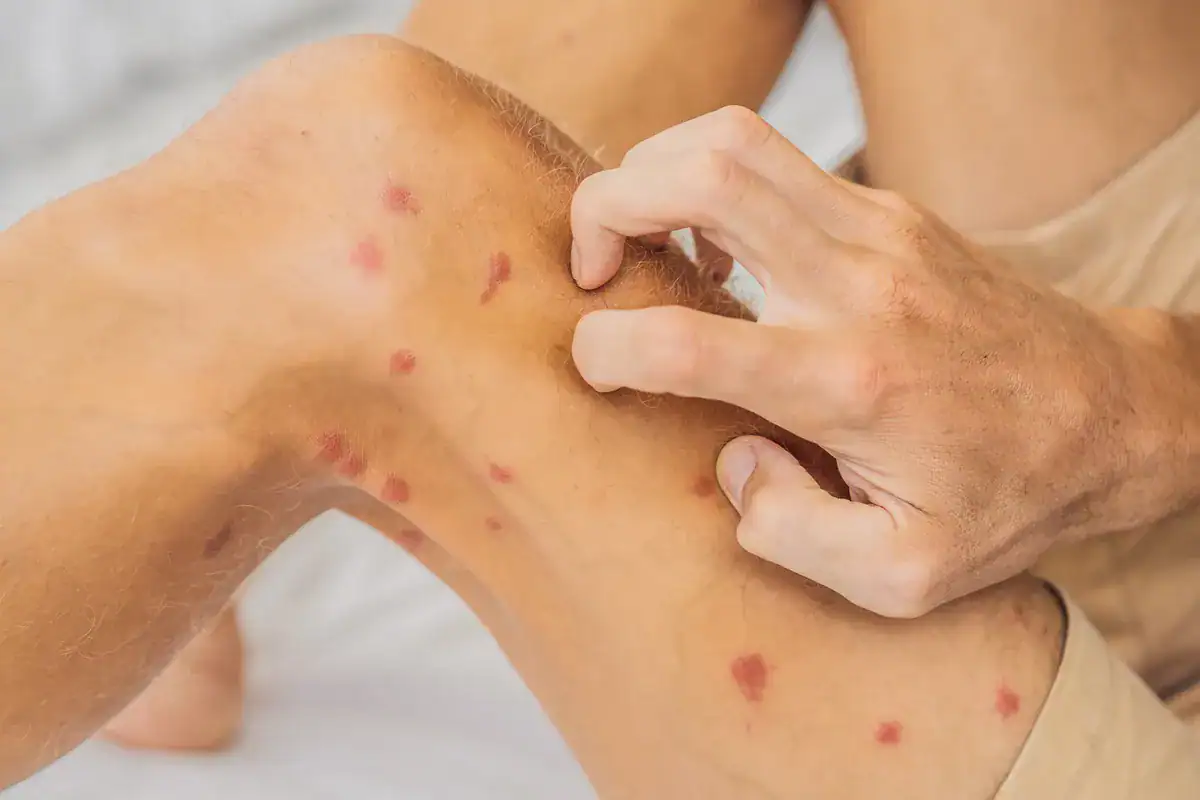
To care for no-see-um bites, wash the area with soap and water, apply a cold compress, and use an over-the-counter anti-itch treatment if needed. Avoid scratching, and seek medical attention if you develop signs of infection or a severe reaction.
When and Where No-See-Ums Are Worst in Panama City
For Panama City and surrounding Gulf Coast communities, local conditions can create favorable environments for no-see-ums. They tend to be most active around dawn and dusk, particularly during warm, humid, or overcast conditions.
Weather Conditions That Increase Activity
Wind can make a noticeable difference. No-see-ums are weak fliers, so breezy conditions can suppress their activity. Calm and still air gives them a better opportunity to remain in an area and find a host. Warm, humid, and overcast days can also create conditions that favor increased activity.
Where No-See-Ums Breed
Their breeding habitats are different from those of mosquitoes. No-see-um larvae develop in moist substrates rather than simply in standing open water. Marsh mud, brackish coastal edges, mangroves, damp soil around canals and drainage areas, and similar environments can provide suitable habitat.
That makes waterfront areas around St. Andrew Bay, marsh edges, canal-front properties, docks, patios, and waterfront lanais potential trouble spots.
Why Waterfront Properties Can Be Challenging
Warm conditions can support no-see-um activity well beyond the limited “mosquito season” many people have in mind. Another challenge is that the source may not be directly on your property.
A nearby marsh, drainage area, or neighboring yard can continue producing new adults that move into surrounding outdoor spaces. Treating one small area may therefore provide only temporary relief when the surrounding conditions continue to support pest activity.
When to Call a Professional
Occasional insect bites don’t necessarily mean you need professional pest control. However, recurring problems can be a different story.
Consider contacting a pest control professional if:
- You repeatedly get bitten in the same outdoor area
- Your patio, lanai, or other outdoor space has become difficult to use
- You are unsure which biting insect is responsible
- DIY treatments provide only short-term relief
- You want a professional to evaluate whether a misting system is appropriate
Professional pest control can help identify the likely pest, evaluate surrounding conditions, and develop a targeted treatment and prevention approach.
If mosquitoes are also affecting your property, explore mosquito control services and learn more about pest management options.
Take Back Your Outdoor Space With Arrow Pest Service!
If no-see-ums are making your patio or lanai difficult to enjoy, Arrow Pest Service can help. Family-owned and operated since 1977, Arrow provides mosquito and biting-insect control throughout Panama City and surrounding areas, including recurring treatments, one-time services, and MistAway mosquito protection systems.
Contact us online or call (850) 874-1900 to discuss your outdoor pest concerns and find a treatment option that fits your property.